Thursday, May 15, 2014


3-D Printer used to print robotic hand

   A 12-year-old boy born without fingers has become Haiti's first recipient of a 3-D printed device, enabling him to play catch with his friends for the first time.Stevenson Joseph, who has lived at an orphanage since he was abandoned at the age of 3, had little hope of treatment in a country where programs for the disabled are rare.

But after he met John Marshall, a software engineer on a mission trip to Haiti for Florida-based food for the poor, his prospects changed. After months of work to perfect the design, a 3-D prosthesis was fitted to his left hand last month.

"It is a great hand," Stevenson says, ticking off his list of accomplishments. "Now I can take a balloon with it. I can score at basketball. I can hold a TV remote and push my friends on their wheelchairs. I can hold a water bottle, a bag. I like it a lot."

Thursday, May 8, 2014


Reflection 

         The main message of the article is to think before you post on social media. Apparently you are never safe, privacy settings don't do much, and you don't know who is watching. Mistakes you make on social media now can have a significant impact on important things later in your life. I agree that it is stupid to think and act that things you do on social media will have no impact. Should something like a selfie really be making an impact on your future? 

       I agree that online social media is also becoming a popularity contest. People have hundreds of friends and most of them they don't regularly talk to in real life. I almost feel social media has changed what makes someone a friend. Just because someone likes your selfie doesn't make them a friend. Yet if someone has like 1,000 friends it is seen as a major accomplishment. We try and make our own life and reputation online, people just need to avoid doing things that will screw up their real lives there. 

Thursday, April 24, 2014

Tech Article 4/25/14

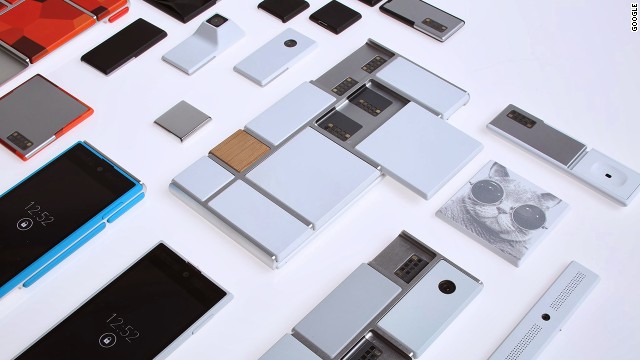
Google's Project Ara is a modular smartphone with swappable hardware components held together by magnets.

Google's future phone: The modular Project Ara


Google is jumping into its next futuristic hardware project. This time it's a modular smartphone dubbed Project Ara that can be customized by swapping out individual pieces, such as the battery and the camera.
The company previewed the very early-stage project at a developer event in Santa Clara, California, this week. Google said the first version of the phone will likely be available in early 2015. Though the company didn't mention a sale price, it said the devices would cost anywhere from $50 to $500 to manufacture, depending on the model.
The phone will come in three sizes, ranging from mini to "phablet," and it will run on a future version of the Android mobile operating system. A frame called the Endo will hold the interchangeable components together with magnets.
The idea is to allow smartphone owners to customize and update their phones on their own -- say, popping out an old battery or broken display for a new version, and thereby creating a device that lasts longer than current smartphones.
Because the Ara project is open-source, the fun will be adding third-party modules or even printing your own with a 3D printer. Instead of relying on a single hardware manufacturer, people could shop around and add unusual elements made by startups, cameras produced by camera companies, or custom hardware for highly specialized work phones.

Friday, April 4, 2014

Tech Article 4/4/14


Supersonic Jet Ditching Windows for Display Screens


Virtual Reality is the next big thing in technology and it may even take over airlines. Spike Aerospace, a Boston engineering firm that’s developing a small supersonic jet, recently caused a stir when it announced its plane wouldn't have any windows in the passenger cabin. Instead, thin screens installed on the walls of the aircraft would display live views captured by cameras mounted outside. The windows will be replaced with virtual reality views of the outside and off course it can also handle other things like movies, video games, even a virtual reality sunset if you want. 

Thursday, March 20, 2014

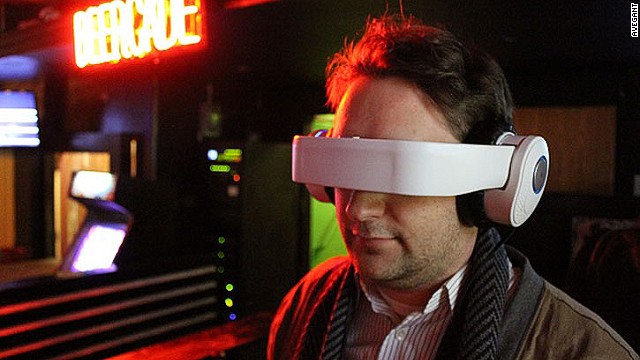
Sony's virtual reality headset will feature motion-tracking technology that will allow players to pan their view around with the movement of their heads.

Sony Unveils Virtual Reality Headset


Sony unveiled its new technology recently at a gaming convention, this super secret project was code named project Morpheus. The headset will give players a high-definition, 3-D view of games that envelops most of their field of vision, along with motion-tracking technology that allows players to pan their view around with the movement of their heads. The headset will connect to Sony’s PlayStation 4 game console. The idea is to immerse players more fully in games using giant television screens that give them the illusion that they are actually in the virtual worlds they see. Technologists have tried to deliver convincing virtual reality experiences for decades, but the technology has been clunky. New technology of today and capabilities of the PlayStation 4 will hopefully make this virtual reality more successful. 

Friday, March 14, 2014

Tech Article 3/14/14


Headset Lets You Explore a Brain in Real Time.

A new system combines brain scanning, brain recording and virtual reality to allow a user tjourney through a person's brain in real-time. Scientists hope to make it so you can explore a persons thoughts and see the progress of a developing brain. When this was tested they were able to explore the mind in 3D, however it has not reached the advanced stage of reading thoughts they hope to achieve. 


Sunday, February 23, 2014

Tech Article 2/23/14

Surgeon wearing the high-tech glasses

Cancer Cell detecting glasses. 
     These glasses would be revolutionary in helping to treat cancer and limiting the number of casualties as a result of it. Cancer Cells are very difficult to see, however, they light up with these glasses and the doctor knows when they all were removed.  A common problem is leaving cells behind and these glasses would limit that. This would limit the need for patients to have multiple surgeries since all the cells can be removed successfully at once. About 25% of breast cancer patients need to return for another operation. These glasses, which are still in the early stages or development, should eliminate that. 

Monday, February 17, 2014

Electronic Article Week 2

government

New Government Airport technology. The end of Privacy! 

Within the next two years the government plans to continue stepping up airline security by releasing this device that instantly strip searches your entire body. This device is so powerful it can identify every last molecule on your body. So it will identify any substances you are exposed too. For example, it will notice the existence of cocaine residue on dollar bills or anything else, marijuana, pills. This secret device can work from over 50 feet away. It is called the Picosecond Programmable Laser. the government can detect traces of THC on your clothing, hands or facial skin from fifty meters away. It will find any drug including serious ones like heroin and ecstasy. 


Thursday, February 6, 2014